
The Future of Humanoid Robots: Our Journey to China 🇨🇳
- Robots For Humanity

- Sep 2, 2025
- 3 min read
Updated: Dec 13, 2025
Between August 5 and August 25, the Robots For Humanity team traveled to China on a journey that became a turning point for our company. This was not a conventional technical or commercial trip. It was, above all, a journey to see the future of humanoid robots with our own eyes and to understand how that future is being built today.
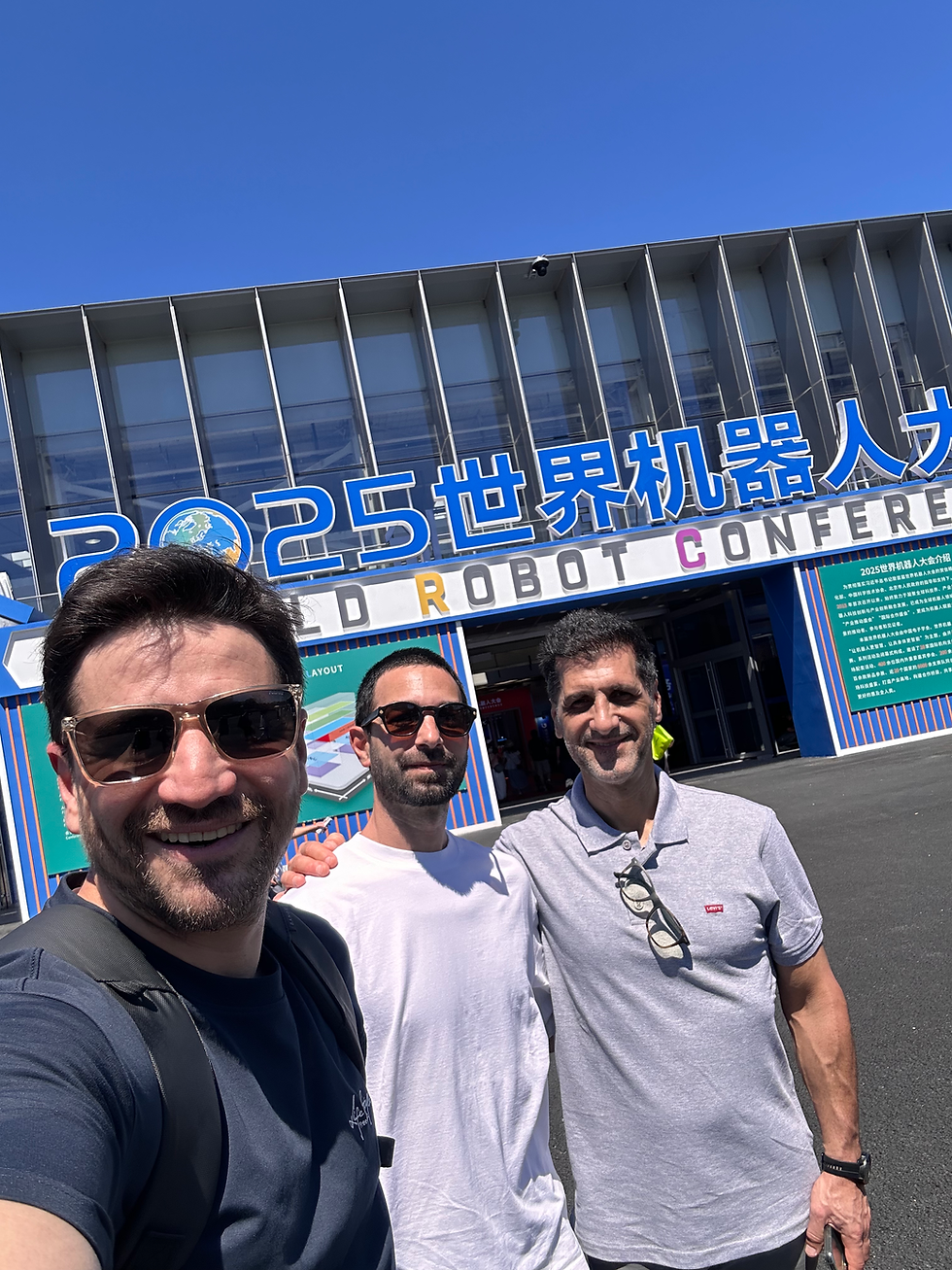
The trip was carried out by the three company founders: Santiago Braña (CTO), José Montalvo (COO), and Alejandro Parise (CEO). We traveled with a shared premise: to validate what we were seeing together, challenge our assumptions, and return with a clear strategy to scale Robots For Humanity.

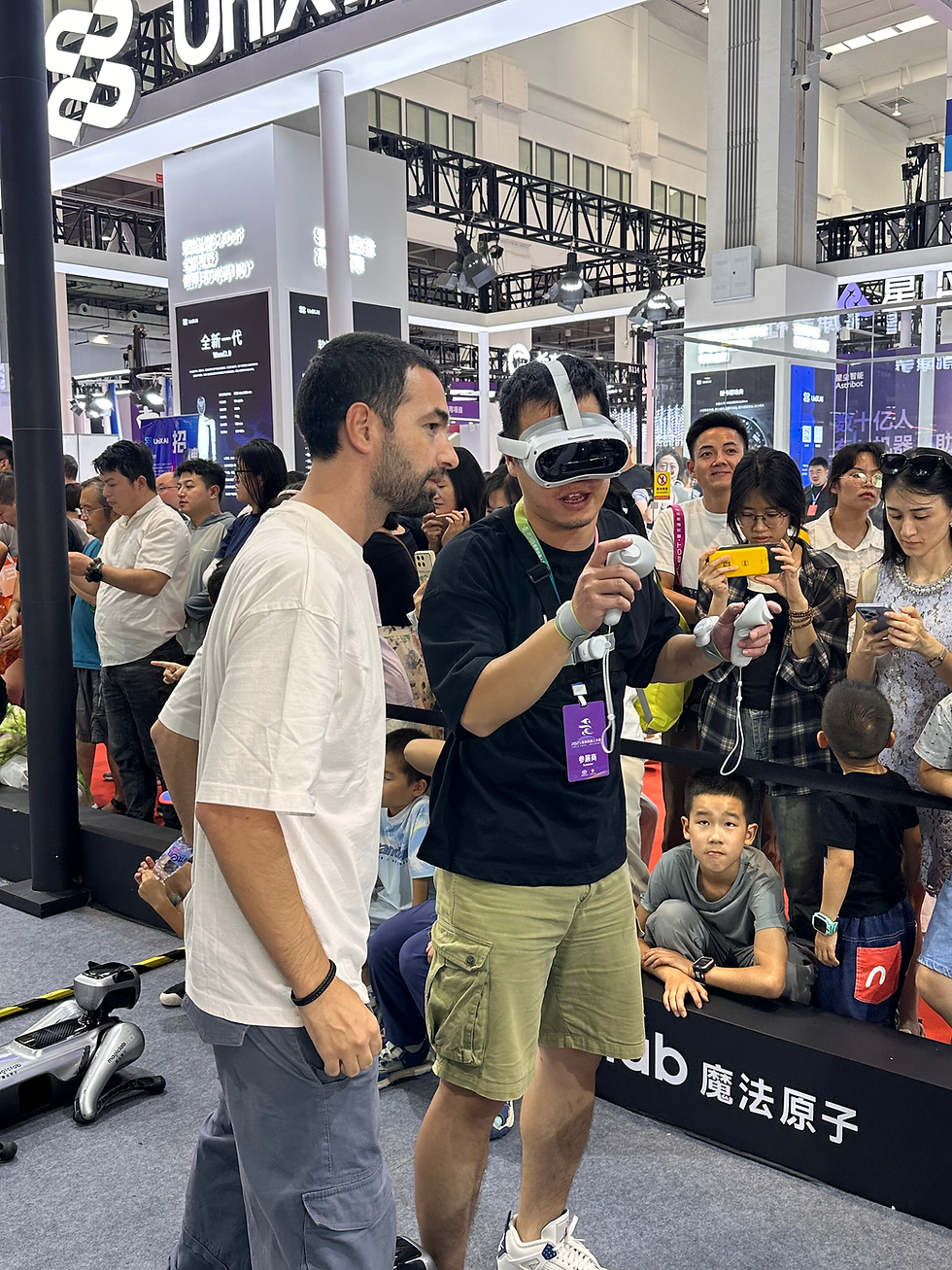
Our first major milestone was the World Robot Conference in Beijing. Walking through the conference felt like stepping into a snapshot of the future. Humanoid robots of all shapes, sizes, and purposes coexisted in the same space. Some were designed for industrial environments, others for services, and many were still experimental. Over the course of a few days, we connected with more than 100 humanoid robot manufacturers, which allowed us to quickly distinguish between mature solutions, long-term bets, and real opportunities for deployment.

Beyond the robots themselves, what stood out most was the broader ecosystem surrounding them. Hardware manufacturers, software developers, research centers, integrators, and startups were all aligned around the same idea: humanoid robots are no longer a distant concept — they are entering a phase of real-world adoption.

From Beijing, the journey also took on an institutional dimension. We visited the Argentine Consulate in China, where we discussed the future of work and potential areas of collaboration between Argentina and China in this new technological landscape. Humanoid robotics is not only transforming production processes; it is reshaping how countries think about competitiveness, employment, and their role in the global economy.

After the conference, the most intensive part of the trip began: in-depth visits to factories and training centers. At RealMan, we explored robots designed for advanced manipulation and concrete industrial applications. We toured their facilities, observed their training processes, and gained insight into how they are transitioning from controlled demonstrations to real deployments in production environments.

At Fourier, the experience offered a complementary perspective. We dove deeper into their long-term vision, analyzing how they design humanoid platforms, train their robots, and plan for global scalability. Each conversation helped us refine a central question: what do companies truly need to integrate humanoid robots into their daily operations?

Our visit to Magic Lab allowed us to explore human-robot interaction in greater depth. Seeing how they approach collaboration, environmental adaptation, and coexistence with people reinforced our belief that humanoid robots should be an extension of the workforce, not isolated replacements.

The journey continued in Shenzhen, one of the world’s leading hubs for technological innovation. There, we visited multiple robotics centers and factories, witnessing humanoid robots in action — moving autonomously, manipulating tools, and collaborating with human operators in complex industrial settings. It was in this context that we finalized a strategic partnership with UBTECH, a key milestone in bringing advanced humanoid solutions to Latin America.

Throughout the entire journey, one idea consistently emerged: the future of humanoid robots is not built on hardware alone. It is built on training, integration, software, and a deep understanding of real-world workflows. This insight strongly reinforced the core focus of Robots For Humanity.
One of the most intense and inspiring moments of the trip was our visit to Unitree. Spending time at Unitree meant working side by side with Chinese development teams, diving deep into their humanoid and legged robotics platforms, and understanding how quickly iteration happens when hardware, software, and AI teams are fully integrated. The pace, openness, and technical depth of the discussions were unlike anything we had experienced before — it was, quite simply, insane.


We returned from China with far more than technical insights and new connections. We came back with the conviction that the future of work will be collaborative, hybrid, and powered by technology, and that our role is to accelerate this transition responsibly and effectively.
This journey was not merely exploratory. It was a defining moment that aligned vision, technology, and strategy, enabling Robots For Humanity to move faster in bringing humanoid robots from the lab into the real world.

Comments